

What’s next for mining, metals and minerals?
Find out at X-Change 2026
Mining is a significant contributor to South Africa’s employment and export earnings and makes up more than 6% of the country’s GDP. That scale comes with scrutiny. Margins are tighter, regulation is stricter, environmental and social expectations keep rising, and safety in this sector can never be overstated.
The mines pulling ahead are the ones turning connectivity into trusted, actionable data — the kind that lets a control room see a full operation in real time and act before a small issue becomes a costly one.
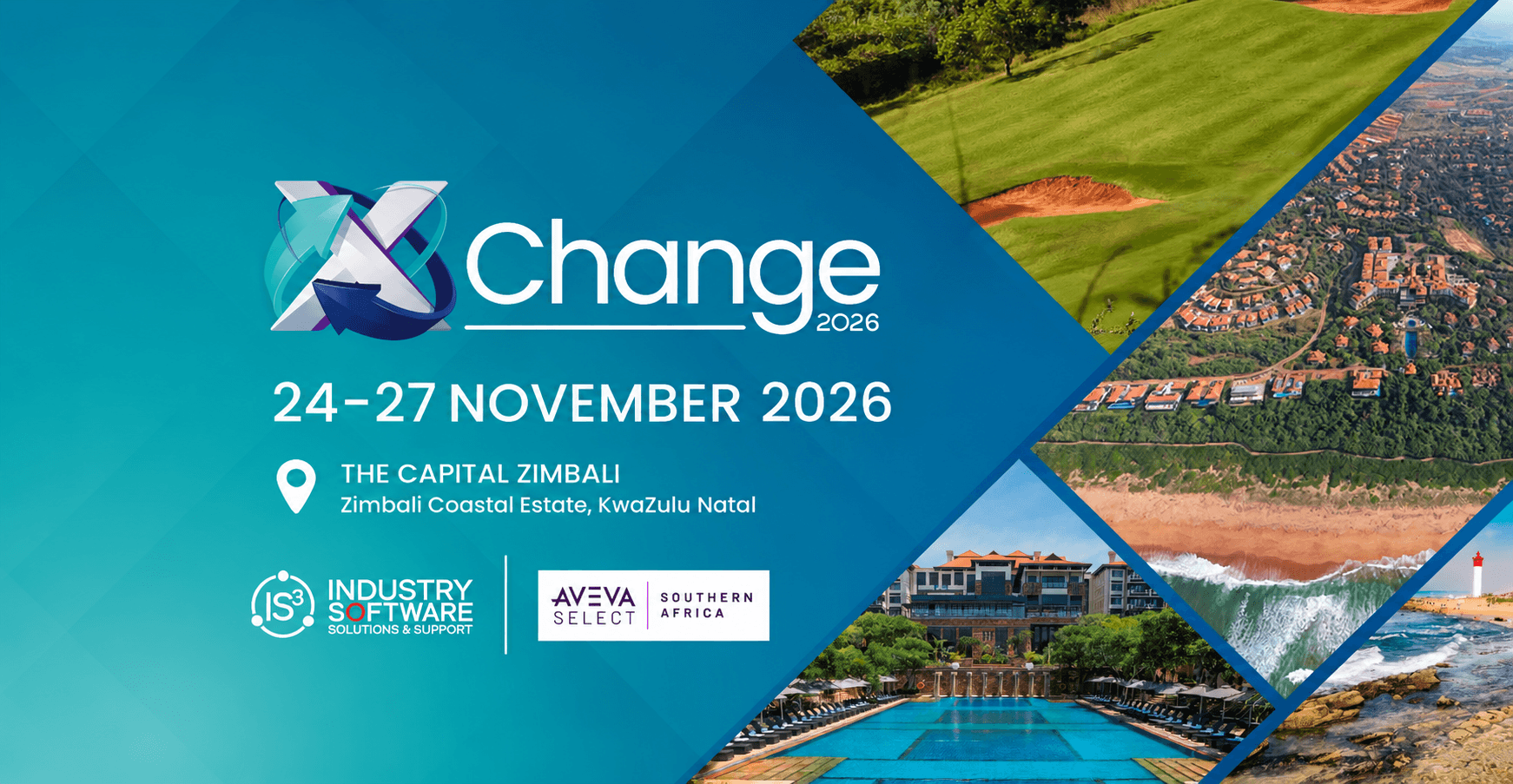
These conversations are at the centre of X-Change 2026, Africa’s leading industrial software conference, running 24–27 November at Zimbali Coastal Estate. For four days, mining, metals and minerals leaders from across the continent will explore what’s driving safety, productivity and asset reliability on real operations.
Where the pressure is building
Ask any operations manager in mining, metals or minerals where the friction is, and a familiar list comes up.

Safety
Safety that has to be proactive, not reactive. Dangerous conditions like toxic gas, rockfall, flooding and equipment risk need real-time visibility, not a lagging indicator.
Asset reliability
Asset reliability under pressure: unplanned downtime on a haul truck, mill or pump station is expensive in a way few other industries can match. Reactive maintenance means you’re a step behind.
Disconnected systems
Disconnected systems across a sprawling site: Production, energy, water and safety data often sit in separate systems, making it hard to build the single operational view that fast decision-making depends on.
Compliance
Environmental and water compliance: Contamination events carry regulatory, reputational and community consequences. Monitoring has to be continuous, not periodic.
Energy costs and efficiency
Energy costs and efficiency. With power a major line-item cost, operators are under growing pressure to optimise consumption without compromising output.
None of these is solved by connectivity alone. They’re solved by turning that connectivity into operational data people can act on.
Why Attend X-Change as a Mining Professional
X-Change brings together industrial software with the practical experience of operators who’ve deployed it on real mining, metals and minerals sites. Expect sessions built around the questions your operation is actually asking:
- Real-time operational visibility — bringing production, energy, water, personnel and equipment status into a single operational view, so decisions happen in the control room, not after the fact.
- Predictive maintenance for critical assets — using sensor and historian data to forecast failure before it interrupts production, rather than waiting for scheduled downtime.
- Digital twins for safer, smarter operations — and why the ones already delivering value are built on integrated, trusted data, not connectivity for its own sake.
- Water and environmental monitoring — continuous, IoT-enabled tracking that protects compliance and community trust simultaneously.
- Energy optimisation at scale — practical approaches to managing one of the biggest cost lines on a mining operation.
Alongside the main programme, dedicated roundtables give delegates a space to compare notes with peers navigating the same safety, reliability and compliance pressures — the kind of conversation that’s harder to have anywhere else in the region.
Secure Your Spot
If your operation is grappling with issues of asset reliability, safety, or the challenge of obtaining a singular, trusted view of your site, X-Change 2026 is your opportunity to connect with those who have navigated similar paths.
What’s next for mining, metals and minerals?
Find out at X-Change 2026
Mining is a significant contributor to South Africa’s employment and export earnings and makes up more than 6% of the country’s GDP. That scale comes with scrutiny. Margins are tighter, regulation is stricter, environmental and social expectations keep rising, and safety in this sector can never be overstated.
The mines pulling ahead are the ones turning connectivity into trusted, actionable data — the kind that lets a control room see a full operation in real time and act before a small issue becomes a costly one.
These conversations are at the centre of X-Change 2026, Africa’s leading industrial software conference, running 24–27 November at Zimbali Coastal Estate. For four days, mining, metals and minerals leaders from across the continent will explore what’s driving safety, productivity and asset reliability on real operations.
Why Attend X-Change as a Mining Professional
X-Change brings together industrial software with the practical experience of operators who’ve deployed it on real mining, metals and minerals sites. Expect sessions built around the questions your operation is actually asking:
- Real-time operational visibility — bringing production, energy, water, personnel and equipment status into a single operational view, so decisions happen in the control room, not after the fact.
- Predictive maintenance for critical assets — using sensor and historian data to forecast failure before it interrupts production, rather than waiting for scheduled downtime.
- Digital twins for safer, smarter operations — and why the ones already delivering value are built on integrated, trusted data, not connectivity for its own sake.
- Water and environmental monitoring — continuous, IoT-enabled tracking that protects compliance and community trust simultaneously.
- Energy optimisation at scale — practical approaches to managing one of the biggest cost lines on a mining operation.
Alongside the main programme, dedicated roundtables give delegates a space to compare notes with peers navigating the same safety, reliability and compliance pressures — the kind of conversation that’s harder to have anywhere else in the region.
Secure Your Spot
If your operation is grappling with issues of asset reliability, safety, or the challenge of obtaining a singular, trusted view of your site, X-Change 2026 is your opportunity to connect with those who have navigated similar paths.
What’s next for mining, metals and minerals?
Find out at X-Change 2026
Mining is a significant contributor to South Africa’s employment and export earnings and makes up more than 6% of the country’s GDP. That scale comes with scrutiny. Margins are tighter, regulation is stricter, environmental and social expectations keep rising, and safety in this sector can never be overstated.
The mines pulling ahead are the ones turning connectivity into trusted, actionable data — the kind that lets a control room see a full operation in real time and act before a small issue becomes a costly one.
These conversations are at the centre of X-Change 2026, Africa’s leading industrial software conference, running 24–27 November at Zimbali Coastal Estate. For four days, mining, metals and minerals leaders from across the continent will explore what’s driving safety, productivity and asset reliability on real operations.
Why Attend X-Change as a Mining Professional
X-Change brings together industrial software with the practical experience of operators who’ve deployed it on real mining, metals and minerals sites. Expect sessions built around the questions your operation is actually asking:
- Real-time operational visibility — bringing production, energy, water, personnel and equipment status into a single operational view, so decisions happen in the control room, not after the fact.
- Predictive maintenance for critical assets — using sensor and historian data to forecast failure before it interrupts production, rather than waiting for scheduled downtime.
- Digital twins for safer, smarter operations — and why the ones already delivering value are built on integrated, trusted data, not connectivity for its own sake.
- Water and environmental monitoring — continuous, IoT-enabled tracking that protects compliance and community trust simultaneously.
- Energy optimisation at scale — practical approaches to managing one of the biggest cost lines on a mining operation.
Alongside the main programme, dedicated roundtables give delegates a space to compare notes with peers navigating the same safety, reliability and compliance pressures — the kind of conversation that’s harder to have anywhere else in the region.
Secure Your Spot
If your operation is grappling with issues of asset reliability, safety, or the challenge of obtaining a singular, trusted view of your site, X-Change 2026 is your opportunity to connect with those who have navigated similar paths.
How Do Good Mining Operations Look?
What high-performing mining operations are doing isn’t necessarily having better equipment. They’re making better and faster decisions, consistently.
The mining operations that are winning have clear visibility from the plant floor to the executive level, with everyone working from the same operational information.
Instead of reviewing yesterday’s performance, winning teams understand what is happening now and what is likely to happen next.
They focus on production planning that’s informed by live operational constraints. Not assumptions.
Metallurgical performance is continuously monitored and adjusted. Not reviewed after losses have already occurred.
Perhaps the biggest difference is organisational alignment.
Winning teams, from operations to maintenance to engineering and even management, prioritise collaboration, supported by trusted data.
This creates a culture of continuous improvement where incremental gains compound over time.
What’s next for mining, metals and minerals?
Find out at X-Change 2026
Mining is a significant contributor to South Africa’s employment and export earnings and makes up more than 6% of the country’s GDP. That scale comes with scrutiny. Margins are tighter, regulation is stricter, environmental and social expectations keep rising, and safety in this sector can never be overstated.
The mines pulling ahead are the ones turning connectivity into trusted, actionable data — the kind that lets a control room see a full operation in real time and act before a small issue becomes a costly one.
These conversations are at the centre of X-Change 2026, Africa’s leading industrial software conference, running 24–27 November at Zimbali Coastal Estate. For four days, mining, metals and minerals leaders from across the continent will explore what’s driving safety, productivity and asset reliability on real operations.
What the Converged Enterprise Actually Looks Like
Financial institutions today run on three overlapping technology layers.
ET
Engineering technology — is the layer that designs, models, and governs the built environment and industrial systems that underpin operations. It’s the bridge between the physical and digital worlds that is often the least visible layer in financial services.
OT
Runs the physical world: the power management systems keeping your data centres cool, the building automation, the control systems behind your ATM network infrastructure, and so much more.
IT
Manages data, transactions, and connectivity. It’s well-governed, well-funded, and well-understood. It’s where most of the security investment goes.
Let me explain.
Target systems that use operational and engineering technologies (incl PLC, HMI, SCADA) in financial industry are:
- Smart ATM and Cash Processing Networks
- Building Automation Systems (BAS) & HVAC for Data Centres
- Physical Security & Access Control Infrastructure
- Banking of Things (BoT) Technologies
- High-Frequency & Algorithmic Trading Engines
- Agentic AI & Quantitative Modelling Systems
In banking IT, the supreme guiding principle is the CIA Triad:
- Confidentiality first
- Integrity second
- Availability third.
Why Attend X-Change as a Mining Professional
X-Change brings together industrial software with the practical experience of operators who’ve deployed it on real mining, metals and minerals sites. Expect sessions built around the questions your operation is actually asking:
- Real-time operational visibility — bringing production, energy, water, personnel and equipment status into a single operational view, so decisions happen in the control room, not after the fact.
- Predictive maintenance for critical assets — using sensor and historian data to forecast failure before it interrupts production, rather than waiting for scheduled downtime.
- Digital twins for safer, smarter operations — and why the ones already delivering value are built on integrated, trusted data, not connectivity for its own sake.
- Water and environmental monitoring — continuous, IoT-enabled tracking that protects compliance and community trust simultaneously.
- Energy optimisation at scale — practical approaches to managing one of the biggest cost lines on a mining operation.
Alongside the main programme, dedicated roundtables give delegates a space to compare notes with peers navigating the same safety, reliability and compliance pressures — the kind of conversation that’s harder to have anywhere else in the region.


How Do Good Mining Operations Look?
What high-performing mining operations are doing isn’t necessarily having better equipment. They’re making better and faster decisions, consistently.
The mining operations that are winning have clear visibility from the plant floor to the executive level, with everyone working from the same operational information.
Instead of reviewing yesterday’s performance, winning teams understand what is happening now and what is likely to happen next.
They focus on production planning that’s informed by live operational constraints. Not assumptions.
Metallurgical performance is continuously monitored and adjusted. Not reviewed after losses have already occurred.
Perhaps the biggest difference is organisational alignment.
Winning teams, from operations to maintenance to engineering and even management, prioritise collaboration, supported by trusted data.
This creates a culture of continuous improvement where incremental gains compound over time.
FAQs
What is cyber resilience in financial services?
Cyber resilience in financial services is the ability to monitor, respond to and recover from cyber incidents while maintaining critical operations. As data breaches and digital banking fraud continue to rise, organisations need resilience across IT, OT and ET environments.
Why does IT security alone no longer provide sufficient protection for banks?
IT security remains essential, but IT, OT and ET environments now share networks, data flows and infrastructure. This convergence can create governance blind spots and expose organisations to risks that extend beyond traditional IT systems.
How can financial institutions improve resilience across IT, OT and ET environments?
Financial institutions can improve resilience by gaining visibility across IT, OT and ET environments, strengthening governance, managing cyber risk across critical operations and adopting a connected operational intelligence approach.
Why is visibility across IT, OT and ET environments important?
Visibility across IT, OT and ET environments helps organisations identify risks, improve resilience and maintain operational continuity. As these systems become increasingly interconnected, a lack of visibility can create governance blind spots and expose critical operations to cyber and operational risks.
Please note that Discover-X is a curated, invitation-only experience. Submitting your registration is the first step. Our team will be in touch to confirm your attendance.
- Source: LexAfrica, South Africa’s Data, AI & Cybersecurity Outlook 2026 (February 2026) / IT-Online, March 2026.
- Source: South African Banking Risk Information Centre (SABRIC), Annual Crime Statistics 2024. Digital banking fraud incidents rose 86% year-on-year to 97,975 cases, with gross fraud losses of R1.888 billion.
- Source: FSCA & Prudential Authority, Joint Standard 2 of 2024 — Cybersecurity and Cyber Resilience Requirements.
What’s next for mining, metals and minerals?
Find out at X-Change 2026
Mining is a significant contributor to South Africa’s employment and export earnings and makes up more than 6% of the country’s GDP. That scale comes with scrutiny. Margins are tighter, regulation is stricter, environmental and social expectations keep rising, and safety in this sector can never be overstated.
The mines pulling ahead are the ones turning connectivity into trusted, actionable data — the kind that lets a control room see a full operation in real time and act before a small issue becomes a costly one.
These conversations are at the centre of X-Change 2026, Africa’s leading industrial software conference, running 24–27 November at Zimbali Coastal Estate. For four days, mining, metals and minerals leaders from across the continent will explore what’s driving safety, productivity and asset reliability on real operations.
What the Converged Enterprise Actually Looks Like
Financial institutions today run on three overlapping technology layers.
ET
Engineering technology — is the layer that designs, models, and governs the built environment and industrial systems that underpin operations. It’s the bridge between the physical and digital worlds that is often the least visible layer in financial services.
OT
Runs the physical world: the power management systems keeping your data centres cool, the building automation, the control systems behind your ATM network infrastructure, and so much more.
IT
Manages data, transactions, and connectivity. It’s well-governed, well-funded, and well-understood. It’s where most of the security investment goes.
What operational challenges have i-RAMS solutions most consistently solved?
i-RAMS assists clients with achieving structured infrastructure lifecycle planning by harvesting the experience of their professional civil engineering team, backed by the i-RAMS integrated asset management software. Typical questions answered are:
- Where are all the assets that we need to manage?
- What is the condition and level of functionality of those assets?
- What maintenance activities are required, what will it cost, and when is the optimum
- time to execute?
- How can the limited available funding be best utilised?
What data or outcomes can i-RAMS share to demonstrate measurable impact in the sector?
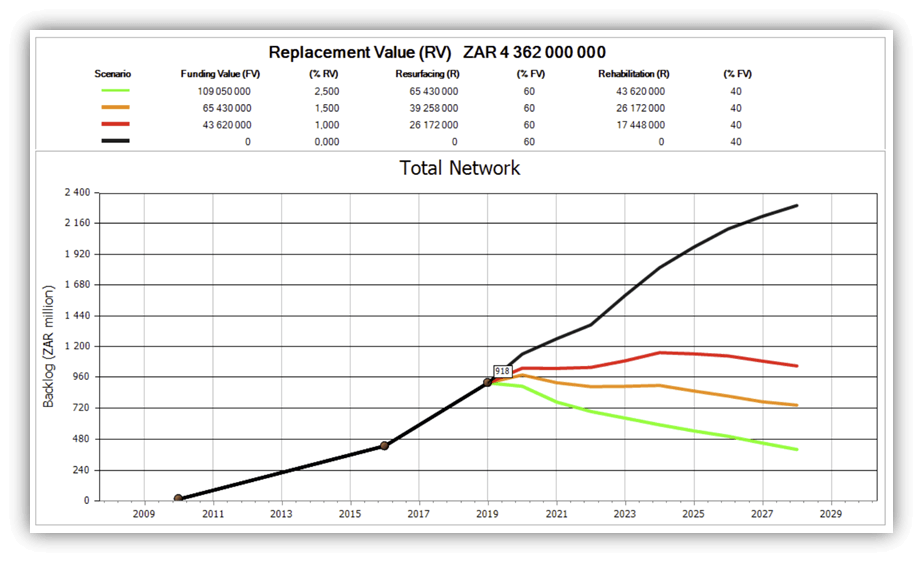
Modelling the impact of different funding scenarios assists decision makers with understanding the impact of fund allocation decisions on the impact of infrastructure over the next 10 years.
Is there a specific client story or case study that illustrates i-RAMS’ infrastructure expertise?
One of our African road authority customers received the accolade of having the best road network in Africa. This achievement is attributable to the availability of high-quality information and the proactive approach of maintenance teams in addressing infrastructure needs.
Let me explain.
Target systems that use operational and engineering technologies (incl PLC, HMI, SCADA) in financial industry are:
- Smart ATM and Cash Processing Networks
- Building Automation Systems (BAS) & HVAC for Data Centres
- Physical Security & Access Control Infrastructure
- Banking of Things (BoT) Technologies
- High-Frequency & Algorithmic Trading Engines
- Agentic AI & Quantitative Modelling Systems
In banking IT, the supreme guiding principle is the CIA Triad:
- Confidentiality first
- Integrity second
- Availability third.

What’s next for mining, metals and minerals?
Find out at X-Change 2026
Johannesburg – A community of excellence in industrial technology application is taking shape in Southern Africa, driven by IS³ and local industrial groups aiming to enhance their competitiveness through digital transformation.
This was evident at the annual X-Change User Conference where IS³ customers shared best practices in implementing AVEVA technologies to help empower other members of this dynamic community. IS³ also recognised companies who have showed exceptional creativity in their use of these leading industrial technologies through its prestigious Customer Awards.
The company presented the Planning and Excellence Scheduling Award to systems integrator 4Sight OT Automation and Vulcan Minerals for their integration of value chain data for pit-to-port-optimisation. 4Sight and Vulcan implemented the AVEVA value chain solution for turnkey planning and operations management at one of the world’s largest coal operations in Mozambique.
“At this operation, the value chain solution has enhanced demand management, planning and scheduling, production, inventory and delay accounting, maintenance execution, and the calculation of performance and conformance KPIs,” said Charl Marais, Digital Transformation BU Manager at 4Sight OT Automation. “It has eliminated organisational silos and enhanced application functionality through automation of business processes.”
Q-Tech Industrial Solutions and Aspen also ascended to the ranks of winners by securing the Optimisation Excellence Award. The parties were recognised for leveraging AVEVA System Platform and Batch Management to deliver projects on time and as per specifications.
“Q-Tech developed a batch report that includes real-time critical process data and audit information for Formulation, SIP (Sterilisation-in-Place), and CIP (Cleaning-in-Place) recipes, available in PDF format. The system guarantees data integrity through robust measures such as access protection and audit trails,” said Louis Oelofse, director of Q-Tech.
In the realm of Operations Control Excellence, 4Sight and Zimplats clinched the award for enhancing efficiency and sustainability at the new Zimplats smelter and concentrator plant in Zimbabwe. The company deployed AVEVA’s advanced System Platform and Operations Management Interface (OMI) tools to significantly enhance its operational capabilities.
ITCAN was honoured for its Engineering and Execution Excellence, demonstrating the remarkable potential of digital twins beyond the oil and gas sectors. The engineering and consulting company was instrumental in rolling out the AVEVA solution across diverse sectors to streamline processes, optimise resources and drive innovation.
IS³ also rewarded excellence in Industrial Information within its community. Systems integrator Saryx and EnerJ Carbon Management were honoured in this category for enabling the industrial digital backbone with AVEVA solutions such as AVEVA PI System, AVEVA Process Historian, and AVEVA Asset Information Management.
Nilen Bermal, Technical Director of IS³, said the company recognises and rewards exemplary use of AVEVA solutions at its annual X-Change Conference to help build a strong, collaborative industrial community.
“Highlighting successful implementations of our AVEVA solutions provides concrete examples of best practices in applying these leading technologies. Our community’s exchanges empower businesses to advance the connected industrial economy on the continent.”
ENDS
Industrial sector at a turning point
Modernise and integrate IT and OT systems to solve Africa’s challenges
The industrial sector in south, east and west Africa urgently needs to transform their aging infrastructure and systems to remain competitive and contribute to addressing the continent’s unique infrastructural and service-related challenges.
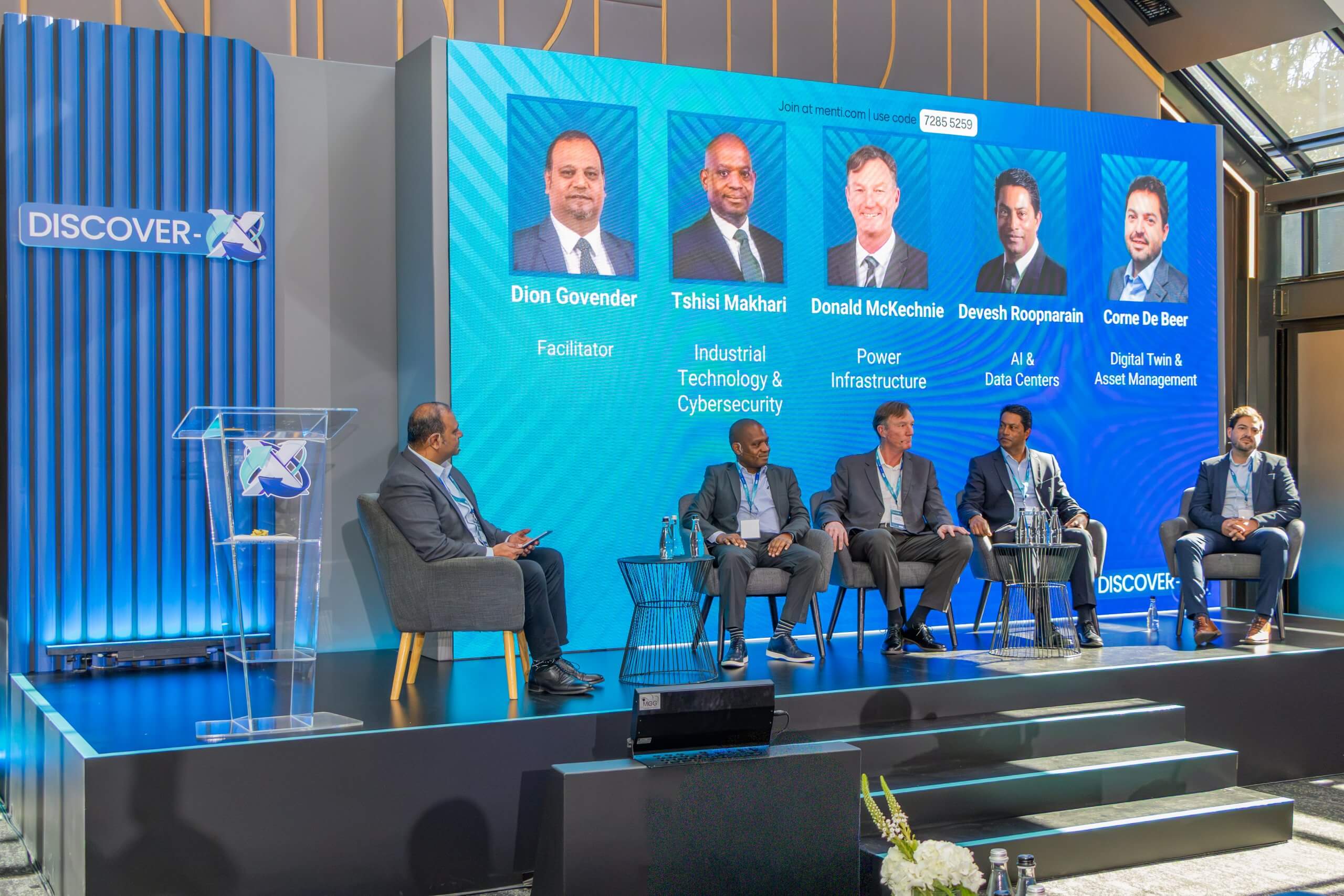
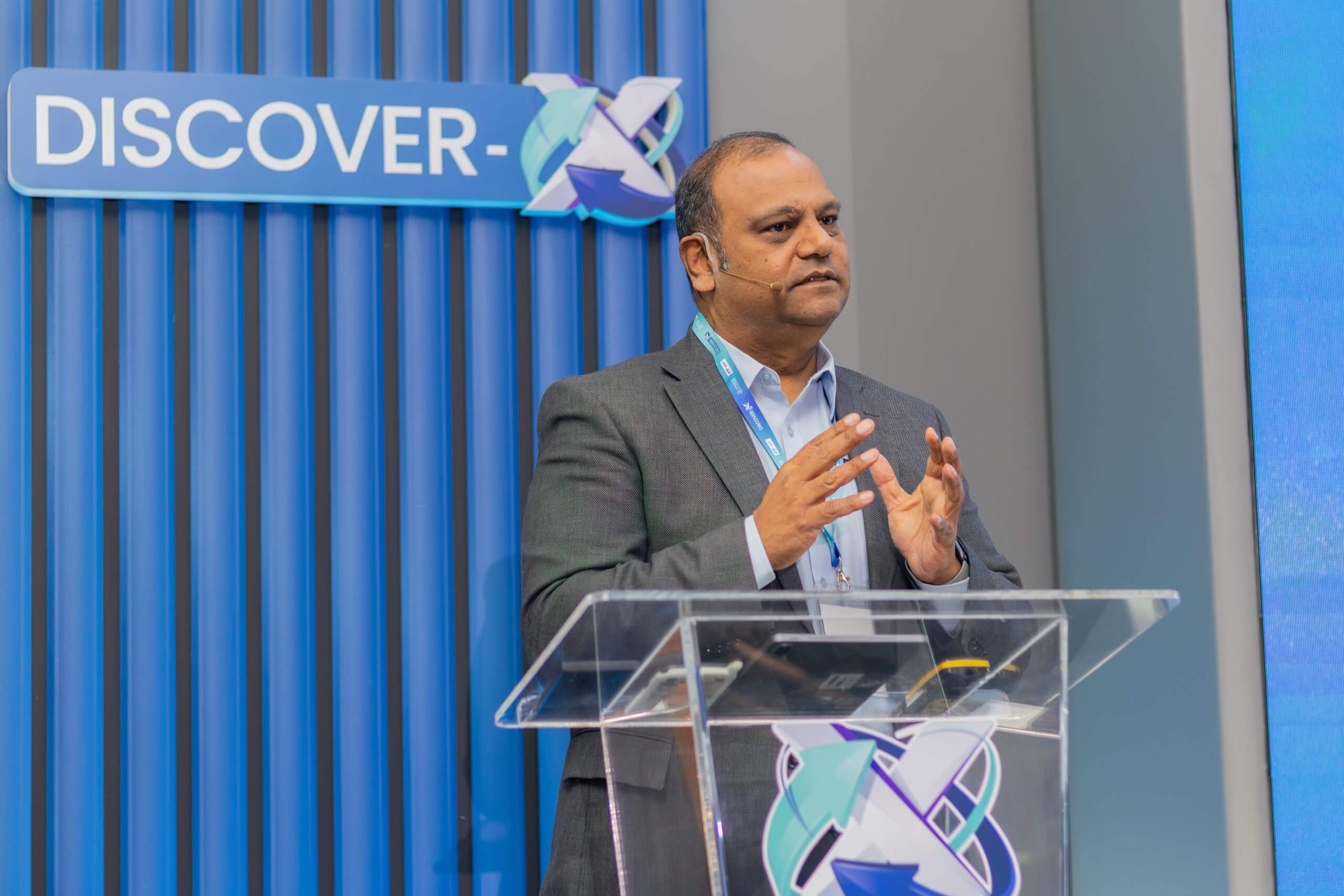
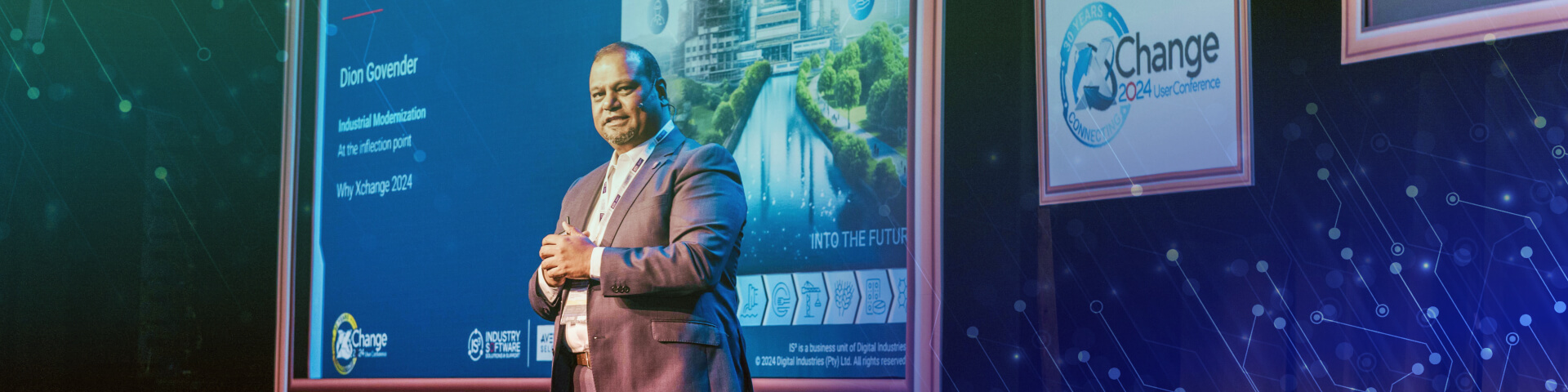
Dion Govender, Managing Director of IS3, said at the opening of the 30th XChange Conference in the picturesque Drakensberg, KwaZulu Natal, that the industrial community plays a significant role in facing and addressing these challenges. Although the sector has historically driven economic growth in the region, it now stands at a critical juncture where its own Information Technology (IT) and Operational Technology (OT) challenges are putting it under pressure.
The African and international conference delegates can rise to this challenge by bringing the Information Technology (IT) and Operational Technology (OT) worlds together.
“The local industrial sector needs to respond to the unprecedented challenges it’s experiencing by accelerating its modernisation,” said Govender. “Industrial systems and infrastructure that are nearing the end of their life cycle can’t keep up with changing demands in business optimisation, production and quality.”
There are higher demands on industrial teams and the sector since the pandemic. The sector is expected to do more with less resources and therefore must make fundamental changes to keep operating efficiently and stabilise its businesses.
The industrial sector is also contending with technical debt (deficit of technology and lack of technical expertise) that exists within organisations. This is hampering organisations’ ability to swiftly respond to customer needs.
“The challenge that we face in these African regions is that when industrials don’t have the agility and capacity to respond to market conditions, they lose their competitive edge.”
Technical deficit in the industrial sector
Industrial groups have accumulated ‘technical debt’ because of chronic underfunding of IT and OT infrastructure while their systems architecture remained stagnant. In addition, the sector has lost critical skills and systems knowledge and has not developed sufficient new skills yet. These factors have led to the technical deficit, which represents the growing gap between business needs and sustainability objectives, and the capabilities of supporting existing systems architecture.
“Technical debt in the sector means that costs are increasing while there is a decline in productivity. It creates a significant barrier to innovation, when there is clearly a need for organisations to innovate at this time,” said Govender.
However, industrial groups that adapt to the current business environment by modernising their infrastructure can capitalise on this pivotal point.
Modernising infrastructure
Many industrial groups stand at crossroads when it comes to deciding whether to maintain or overhaul their systems and architecture. For some, it requires a critical balancing act between modernising or retaining legacy systems in their current state.
But modernisation is a strategic imperative that requires a holistic approach. Organisational culture, process and technology must be transformed. “To be successful, companies must address the skills gap, align their modernisation drive with their core business goals and deliver a measurable return-on-investment,” said Govender.
IS³ recommends investing in initiatives that have the greatest potential impact. This can be done by first modernising systems that are unstable, demand excessive manual oversight or are incompatible with emerging technologies.
“The blueprint for modernisation in the sector is creating visibility of the full value chain by bringing IT and OT worlds together,” emphasised Govender.
Purpose-built solution for industrial sector
Govender highlighted that business continuity concerns can be addressed with the AVEVA Connect industrial cloud platform that has been purpose-built for the industrial sector, including manufacturing and critical infrastructure.
“The Connect platform lays the foundation for addressing our current challenges and transforming our environments without replacing our IT and OT infrastructure. It is a gamechanger as it paves the way for broader innovation across processes, services and products.”
“AVEVA’s Connect software solution seamlessly merges the IT and OT worlds for industrials. It provides the decisionmakers – such as CEOs, CIOs, COOs, and CFOs – with the visibility of operations and the value-chain required to optimise their businesses and maintain a connected industrial ecosystem.”
ENDS
Source to read full article:
Industrial sector at a turning point
Modernise and integrate IT and OT systems to solve Africa’s challenges
The industrial sector in south, east and west Africa urgently needs to transform their aging infrastructure and systems to remain competitive and contribute to addressing the continent’s unique infrastructural and service-related challenges.
Dion Govender, Managing Director of IS3, said at the opening of the 30th XChange Conference in the picturesque Drakensberg, KwaZulu Natal, that the industrial community plays a significant role in facing and addressing these challenges. Although the sector has historically driven economic growth in the region, it now stands at a critical juncture where its own Information Technology (IT) and Operational Technology (OT) challenges are putting it under pressure.
The African and international conference delegates can rise to this challenge by bringing the Information Technology (IT) and Operational Technology (OT) worlds together.
“The local industrial sector needs to respond to the unprecedented challenges it’s experiencing by accelerating its modernisation,” said Govender. “Industrial systems and infrastructure that are nearing the end of their life cycle can’t keep up with changing demands in business optimisation, production and quality.”
There are higher demands on industrial teams and the sector since the pandemic. The sector is expected to do more with less resources and therefore must make fundamental changes to keep operating efficiently and stabilise its businesses.
The industrial sector is also contending with technical debt (deficit of technology and lack of technical expertise) that exists within organisations. This is hampering organisations’ ability to swiftly respond to customer needs.
“The challenge that we face in these African regions is that when industrials don’t have the agility and capacity to respond to market conditions, they lose their competitive edge.”
Technical deficit in the industrial sector
Industrial groups have accumulated ‘technical debt’ because of chronic underfunding of IT and OT infrastructure while their systems architecture remained stagnant. In addition, the sector has lost critical skills and systems knowledge and has not developed sufficient new skills yet. These factors have led to the technical deficit, which represents the growing gap between business needs and sustainability objectives, and the capabilities of supporting existing systems architecture.
“Technical debt in the sector means that costs are increasing while there is a decline in productivity. It creates a significant barrier to innovation, when there is clearly a need for organisations to innovate at this time,” said Govender.
However, industrial groups that adapt to the current business environment by modernising their infrastructure can capitalise on this pivotal point.
Modernising infrastructure
Many industrial groups stand at crossroads when it comes to deciding whether to maintain or overhaul their systems and architecture. For some, it requires a critical balancing act between modernising or retaining legacy systems in their current state.
But modernisation is a strategic imperative that requires a holistic approach. Organisational culture, process and technology must be transformed. “To be successful, companies must address the skills gap, align their modernisation drive with their core business goals and deliver a measurable return-on-investment,” said Govender.
IS³ recommends investing in initiatives that have the greatest potential impact. This can be done by first modernising systems that are unstable, demand excessive manual oversight or are incompatible with emerging technologies.
“The blueprint for modernisation in the sector is creating visibility of the full value chain by bringing IT and OT worlds together,” emphasised Govender.
Purpose-built solution for industrial sector
Govender highlighted that business continuity concerns can be addressed with the AVEVA Connect industrial cloud platform that has been purpose-built for the industrial sector, including manufacturing and critical infrastructure.
“The Connect platform lays the foundation for addressing our current challenges and transforming our environments without replacing our IT and OT infrastructure. It is a gamechanger as it paves the way for broader innovation across processes, services and products.”
“AVEVA’s Connect software solution seamlessly merges the IT and OT worlds for industrials. It provides the decisionmakers – such as CEOs, CIOs, COOs, and CFOs – with the visibility of operations and the value-chain required to optimise their businesses and maintain a connected industrial ecosystem.”
ENDS
Source to read full article:
Industrial sector at a turning point
Modernise and integrate IT and OT systems to solve Africa’s challenges
The industrial sector in south, east and west Africa urgently needs to transform their aging infrastructure and systems to remain competitive and contribute to addressing the continent’s unique infrastructural and service-related challenges.
Dion Govender, Managing Director of IS3, said at the opening of the 30th XChange Conference in the picturesque Drakensberg, KwaZulu Natal, that the industrial community plays a significant role in facing and addressing these challenges. Although the sector has historically driven economic growth in the region, it now stands at a critical juncture where its own Information Technology (IT) and Operational Technology (OT) challenges are putting it under pressure.
The African and international conference delegates can rise to this challenge by bringing the Information Technology (IT) and Operational Technology (OT) worlds together.
“The local industrial sector needs to respond to the unprecedented challenges it’s experiencing by accelerating its modernisation,” said Govender. “Industrial systems and infrastructure that are nearing the end of their life cycle can’t keep up with changing demands in business optimisation, production and quality.”
There are higher demands on industrial teams and the sector since the pandemic. The sector is expected to do more with less resources and therefore must make fundamental changes to keep operating efficiently and stabilise its businesses.
The industrial sector is also contending with technical debt (deficit of technology and lack of technical expertise) that exists within organisations. This is hampering organisations’ ability to swiftly respond to customer needs.
“The challenge that we face in these African regions is that when industrials don’t have the agility and capacity to respond to market conditions, they lose their competitive edge.”
Technical deficit in the industrial sector
Industrial groups have accumulated ‘technical debt’ because of chronic underfunding of IT and OT infrastructure while their systems architecture remained stagnant. In addition, the sector has lost critical skills and systems knowledge and has not developed sufficient new skills yet. These factors have led to the technical deficit, which represents the growing gap between business needs and sustainability objectives, and the capabilities of supporting existing systems architecture.
“Technical debt in the sector means that costs are increasing while there is a decline in productivity. It creates a significant barrier to innovation, when there is clearly a need for organisations to innovate at this time,” said Govender.
However, industrial groups that adapt to the current business environment by modernising their infrastructure can capitalise on this pivotal point.
Modernising infrastructure
Many industrial groups stand at crossroads when it comes to deciding whether to maintain or overhaul their systems and architecture. For some, it requires a critical balancing act between modernising or retaining legacy systems in their current state.
But modernisation is a strategic imperative that requires a holistic approach. Organisational culture, process and technology must be transformed. “To be successful, companies must address the skills gap, align their modernisation drive with their core business goals and deliver a measurable return-on-investment,” said Govender.
IS³ recommends investing in initiatives that have the greatest potential impact. This can be done by first modernising systems that are unstable, demand excessive manual oversight or are incompatible with emerging technologies.
“The blueprint for modernisation in the sector is creating visibility of the full value chain by bringing IT and OT worlds together,” emphasised Govender.
Purpose-built solution for industrial sector
Govender highlighted that business continuity concerns can be addressed with the AVEVA Connect industrial cloud platform that has been purpose-built for the industrial sector, including manufacturing and critical infrastructure.
“The Connect platform lays the foundation for addressing our current challenges and transforming our environments without replacing our IT and OT infrastructure. It is a gamechanger as it paves the way for broader innovation across processes, services and products.”
“AVEVA’s Connect software solution seamlessly merges the IT and OT worlds for industrials. It provides the decisionmakers – such as CEOs, CIOs, COOs, and CFOs – with the visibility of operations and the value-chain required to optimise their businesses and maintain a connected industrial ecosystem.”
ENDS
Source to read full article:
Industrial sector at a turning point
Modernise and integrate IT and OT systems to solve Africa’s challenges
The industrial sector in south, east and west Africa urgently needs to transform their aging infrastructure and systems to remain competitive and contribute to addressing the continent’s unique infrastructural and service-related challenges.
Dion Govender, Managing Director of IS3, said at the opening of the 30th XChange Conference in the picturesque Drakensberg, KwaZulu Natal, that the industrial community plays a significant role in facing and addressing these challenges. Although the sector has historically driven economic growth in the region, it now stands at a critical juncture where its own Information Technology (IT) and Operational Technology (OT) challenges are putting it under pressure.
The African and international conference delegates can rise to this challenge by bringing the Information Technology (IT) and Operational Technology (OT) worlds together.
“The local industrial sector needs to respond to the unprecedented challenges it’s experiencing by accelerating its modernisation,” said Govender. “Industrial systems and infrastructure that are nearing the end of their life cycle can’t keep up with changing demands in business optimisation, production and quality.”
There are higher demands on industrial teams and the sector since the pandemic. The sector is expected to do more with less resources and therefore must make fundamental changes to keep operating efficiently and stabilise its businesses.
The industrial sector is also contending with technical debt (deficit of technology and lack of technical expertise) that exists within organisations. This is hampering organisations’ ability to swiftly respond to customer needs.
“The challenge that we face in these African regions is that when industrials don’t have the agility and capacity to respond to market conditions, they lose their competitive edge.”
Technical deficit in the industrial sector
Industrial groups have accumulated ‘technical debt’ because of chronic underfunding of IT and OT infrastructure while their systems architecture remained stagnant. In addition, the sector has lost critical skills and systems knowledge and has not developed sufficient new skills yet. These factors have led to the technical deficit, which represents the growing gap between business needs and sustainability objectives, and the capabilities of supporting existing systems architecture.
“Technical debt in the sector means that costs are increasing while there is a decline in productivity. It creates a significant barrier to innovation, when there is clearly a need for organisations to innovate at this time,” said Govender.
However, industrial groups that adapt to the current business environment by modernising their infrastructure can capitalise on this pivotal point.
Modernising infrastructure
Many industrial groups stand at crossroads when it comes to deciding whether to maintain or overhaul their systems and architecture. For some, it requires a critical balancing act between modernising or retaining legacy systems in their current state.
But modernisation is a strategic imperative that requires a holistic approach. Organisational culture, process and technology must be transformed. “To be successful, companies must address the skills gap, align their modernisation drive with their core business goals and deliver a measurable return-on-investment,” said Govender.
IS³ recommends investing in initiatives that have the greatest potential impact. This can be done by first modernising systems that are unstable, demand excessive manual oversight or are incompatible with emerging technologies.
“The blueprint for modernisation in the sector is creating visibility of the full value chain by bringing IT and OT worlds together,” emphasised Govender.
Purpose-built solution for industrial sector
Govender highlighted that business continuity concerns can be addressed with the AVEVA Connect industrial cloud platform that has been purpose-built for the industrial sector, including manufacturing and critical infrastructure.
“The Connect platform lays the foundation for addressing our current challenges and transforming our environments without replacing our IT and OT infrastructure. It is a gamechanger as it paves the way for broader innovation across processes, services and products.”
“AVEVA’s Connect software solution seamlessly merges the IT and OT worlds for industrials. It provides the decisionmakers – such as CEOs, CIOs, COOs, and CFOs – with the visibility of operations and the value-chain required to optimise their businesses and maintain a connected industrial ecosystem.”
ENDS
Source to read full article: